Farming & Production
The Grove
Harvest
Extraction
Measurement
Bottle & Seal


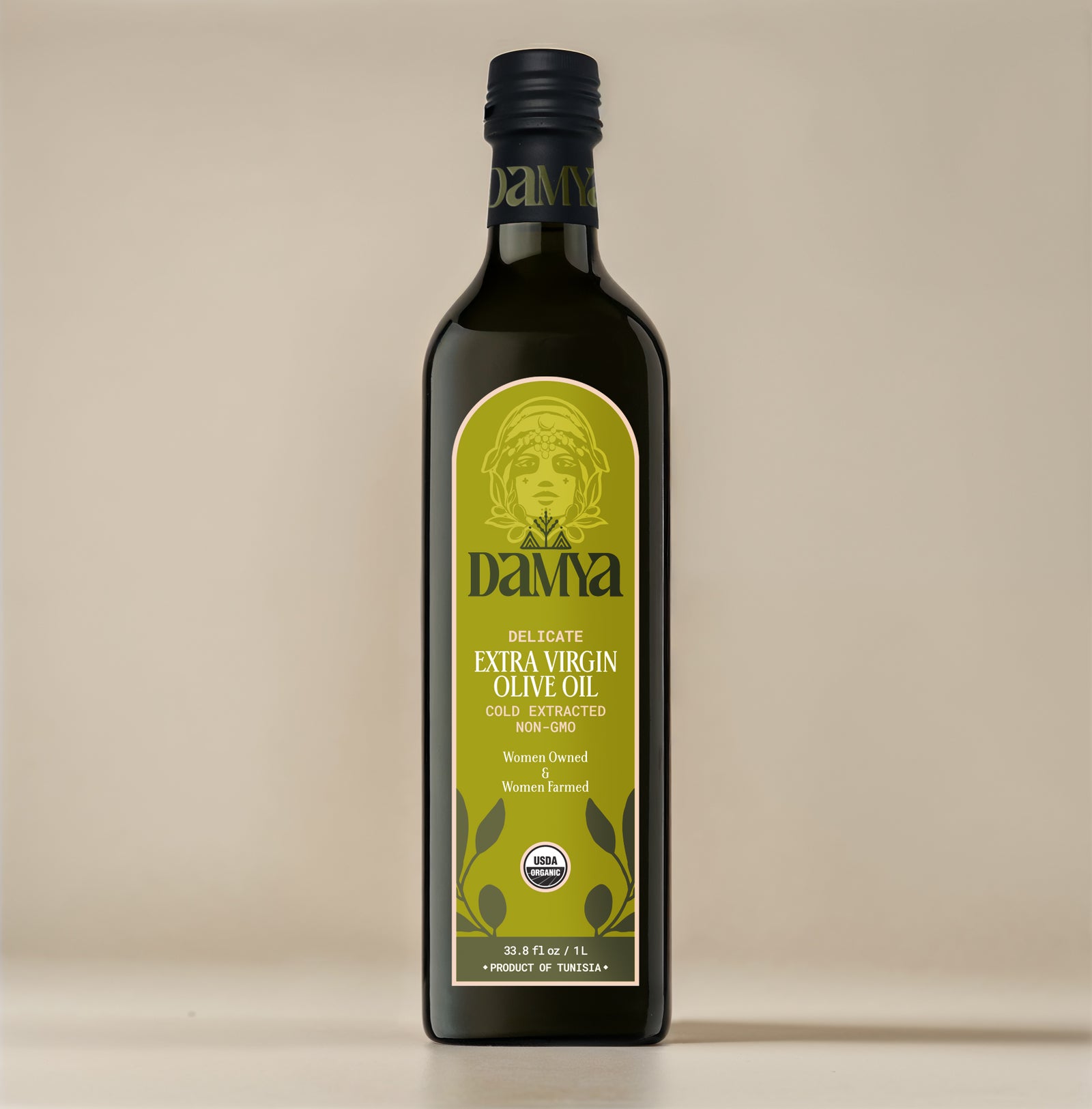
We believe good oil starts with healthy soil. Our olives come from Tunisian terroir and are cultivated using Amazigh farming knowledge passed through generations. Harvested by hand and extracted within hours, each step is controlled from grove to bottle to preserve structure, freshness, and measurable quality.
Tunisia has long been a source of exceptional olive oil. Damya exists to bring that origin forward with clarity and authority.
Our olives are grown in Tunisia, where the sun-drenched semi-arid landscape produces the world’s finest olive varietals.
Climate, soil, and olive varietals all influence how the oil develops. These conditions define the structure, flavor, and stability of each harvest.
We work exclusively with native Tunisian olive varietals, including Chemlali and Chetoui.
Each varietal contributes distinct characteristics:
- Chemlali → balanced, smooth, stable
- Chetoui → more robust, higher in polyphenols
The final oil reflects both varietal and harvest conditions.
All DAMYA oils are certified organic.
We do not use synthetic pesticides or chemical inputs. Farming practices are focused on maintaining soil health, biodiversity, and long-term productivity.
Our Biodynamic EVOO is produced using biodynamic farming methods.
These practices emphasize:
- soil regeneration
- biodiversity
- natural farming cycles
This approach goes beyond organic certification and focuses on the long-term health of the land. Learn more about Biodynamic farming here.
Damya olives are harvested once per year. Timing is critical. Harvesting earlier results in higher polyphenol content and more structured oils. Each harvest typically takes place between November and January, depending on the season and conditions.
Understanding Harvest Dates
Each bottle reflects a single harvest season. A date such as December 2024 refers to the most recent harvest, not how long the oil has been sitting. After harvest, the oil is extracted immediately and bottled shortly after, preserving its freshness, structure, and polyphenol content from the start.
Harvest Method
Olives are harvested carefully to avoid damage and oxidation before extraction.Minimizing time between harvest and milling is essential to maintaining quality.
All DAMYA olive oils are cold-extracted.
This means the oil is mechanically extracted without excessive heat, preserving:
- flavor
- aroma
- nutritional compounds
Time to Extraction
Olives are processed within hours of harvest.
This prevents degradation and ensures freshness is maintained from the start.
Each harvest is evaluated using measurable indicators:
- Polyphenol content
- Acidity level
- Harvest date
- Origin
These values define freshness, stability, and flavor.
Every bottle can be traced back to its origin.
We do not blend across regions or seasons.
Each oil reflects a single harvest and a specific growing environment.
From the Grove...
Insights on harvest, farming, origin, and quality.